Did they dodge the question? Analysis of 25,000 earnings calls highlights evasive CEO’s as a major red flag
Concentration risk, red flags and AI-driven earnings analysis reveal where hidden weakness is building.
It is not every day you dial into a fund webinar and walk away thinking about youth mental health.
But that is part of the Future Generation Global (ASX: FGG) story.
FGG is a listed investment company, or LIC, that provides investors with access to a diversified portfolio of leading global fund managers. Those managers forgo their fees, allowing the company to donate 1% of average net assets each year to youth mental health charities.
Every dollar invested is working twice: once in global equity markets, and once supporting young Australians through not-for-profit partners.
More than $50 million has been donated since inception.
By operating with managers working pro bono, FGG has created what Founder and Director Geoff Wilson AO describes as a structural fee advantage compared to traditional vehicles over the past decade. “What the shareholder gets, it really is a win-win,” Wilson said, pointing to roughly a 40% reduction in fees.
Still, Wilson acknowledged “a little bit of frustration” that FGG has been trading at a discount to net tangible assets (NTA). In response, the board lifted the fully franked dividend and declared a 3-cent fully franked special dividend, supported by a growing profit reserve. The result is a trailing yield of approximately 6.6% before franking.
Sounds pretty good, right? Well, alongside the social impact, performance has been competitive. Over the past three years, the portfolio has delivered double-digit annualised returns, supported by deliberate portfolio construction and a narrowing discount to net tangible assets (NTA).
Investing doesn’t often come with warm, fuzzy feelings. So when I heard about this, I just had to dial in to their latest FY2025 webinar.
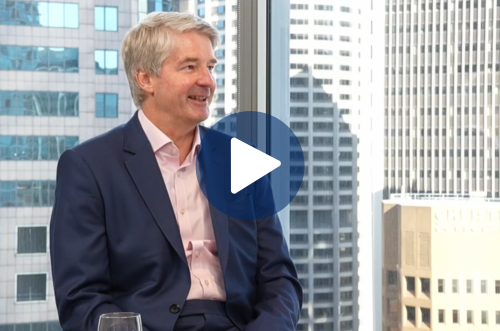
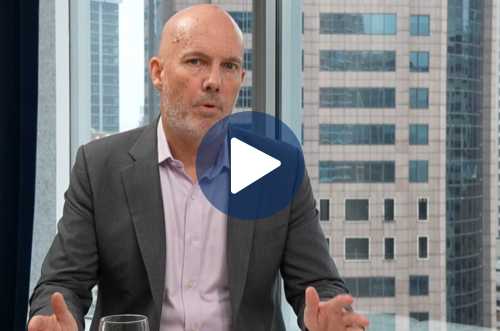
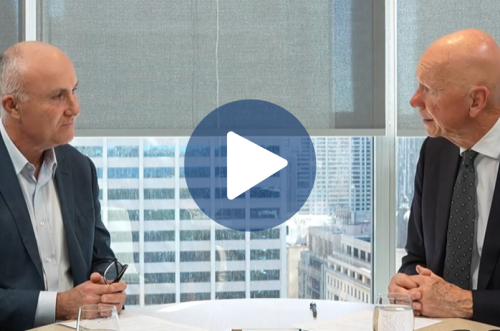
On the call, Geoff Wilson AO, Chief Investment Officer, Lee Hopperton, and Plato’s Head of Long/Short Strategies, Dr David Allen, unpacked markets and process, with Allen FGG’s top-performing manager in 2025.
The discussion ranged from the dominance of a handful of mega-cap stocks to measurable warning signs, including how even a CEO dodging a question can foreshadow underperformance.
In a world where 10 stocks dominate global indices and AI hype runs hot, discipline and measurable signals may matter more than ever.
Below, I unpack the key insights, from concentration risk and diversification to red flags, AI signals, and a stock Allen likes right now.
Markets are more concentrated than they look
The top 10 stocks in the MSCI World Index now account for roughly a quarter of the index. Nearly 70% of global market capitalisation sits in the United States, with the bulk of those names exposed to the same technology and AI themes.
“You’ve got an enormous amount of concentration by the companies and the themes that are driving markets,” Hopperton said.
Passive flows crowd into the same mega-cap names, narrowing benchmarks and lifting correlations. Owning the index increasingly means owning the same trades.
This is not to say you should ditch the Magnificent Seven. It means recognising how much weight sits in a small group of stocks, and what that implies if sentiment shifts.
Diversification is not automatic
Against that backdrop, Hopperton outlined why portfolio construction matters.
Rather than mirroring the MSCI’s 25% weight in the top 10 stocks, exposure is materially lower. There is still meaningful North American exposure, but also an overweight to Europe relative to the benchmark.
Over the past three years to 31 December 2025, Future Generation Global has delivered 18.1% at the portfolio level and a 16.2% total shareholder return over FY2025, supported by performance and a narrowing discount.
But beyond FGG, the broader point is that diversification does not happen by accident. It comes down to deliberate choices about where risk sits.
8 red flags and you’re out
Allen’s system at Plato is designed to avoid blow-ups before looking for winners.
Even the most diligent analyst can only go deep on 20 to 25 companies at a time. Plato’s systematic approach screens more than 10,000, layering in 150 automated red flags that look for accounting anomalies, deteriorating fundamentals and behavioural warning signs.
“Systematic investing… utilises virtually all the same tools as traditional fundamental investing, but we’ve really systematised it at an industrial scale,” Allen said.
“Our research, and this is research that goes back to the mid-90s, shows that if a company has eight or more of Plato’s red flags on average underperforms the market by 20% over the next 12 months.”
While eight red flags may not sound like much in the context of screening for 150, it is significant enough to make a difference. In many cases, it reflects balance sheet stress, aggressive accounting, weakening quality, or management evasiveness surfacing early.
Allen is clear to acknowledge that despite being in the top quartile hit rate, there are limits for even the best managers.
“We’re certainly at the top quartile hit rate of a fund manager. When a fund manager’s doing really well, it’s only 55%. It’s not that high, we can get in the high 50s, so we’re still getting 4 out of 10 wrong. But by being more systematic in our approach, we can do better over time.”
Even at the top end, that means four out of ten decisions will be wrong. The edge lies in filtering out the worst risks before they become permanent losses.
The AI signal few are measuring
Allen was careful to frame AI as a tool, not a replacement for judgement.
“There’s quite a bit of AI washing… No more than 10%, 15% of our process is AI-driven, but it’s absolutely additive.”
His team analyses 25,000 earnings calls each year using large language models, measuring tone shifts and scoring whether executives answer questions directly or evade them.
“Those companies that are in the most evasive 5%… they markedly underperform the stock price over the next three or six months.”
If a CEO pivots away from direct questions about outlook, margins or guidance, that may not just be style. It may signal deeper issues.
Allen’s stock pick
Allen highlighted Rolls-Royce (LON: RR) as one of the names he “really likes”.
“People think car company, but it’s really aerospace and defence,” he said, noting its involvement in the UK’s nuclear Trident submarine program.
He pointed to a sharp improvement in free cash flow, which he said has “just gone absolutely through the roof”, alongside growth supported by the rearmament of Europe.
“So, I think that’s a very good place to be,” Allen said.
On valuation, he added that the shares are “pretty reasonable… they’re in their teens.”
Licensed by Copyright Agency. You must not copy this work without permission.

 News
News 
 Events